Grande Prêmio do Brasil
Grande Prêmio do Brasil
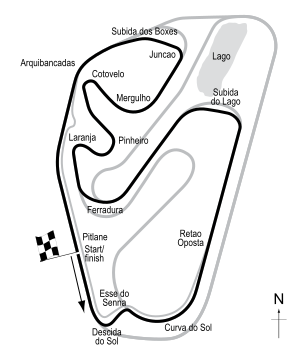
When the 1995 Formula 1 cars came out for practice in Sao Paulo they looked decidedly skittery in comparison to the 1994 models. The aerodynamic regulations, insisted upon by the FIA, had drastically reduced downforce. The cars were sliding again. On the bumps of Interlagos it soon emerged that the Williams-Renaults of Damon Hill and David Coulthard were the most stable cars. The Benetton-Renaults of Michael Schumacher and Johnny Herbert did not have the same fluidity of movement. They actually looked a bit of a handful. They were also not very reliable: on the first day of qualifying Schumacher had a steering failure and crashed heavily. The team stopped Herbert from qualifying until the problem had been traced. The following morning Schumacher gave everyone a scare by going off again, but this time it was driver error. In final qualifying Michael put on a good show to qualify second to Hill but ahead of Coulthard. Herbert did a good job to qualify fourth despite having had only one session. It was a Renault 1-2-3-4 on the grid.
The race was dominated by the Renault men with Schumacher making the best start and beating Hill into the first corner. After an initial burst of speed from the German, Hill came back at him and took the lead when Michael pitted for the first time. Benetton was running to three stops but Williams was going for two and so Hill went ahead and he was looking strong as Schumacher struggled to keep up. Damon, however, was to be sidelined by a gearbox problem, which left Schumcaher to lead home Coulthard and Gerhard Berger's Ferrari.
Mika Häkkinen and Mark Blundell finished fourth and sixth in their McLarens - Nigel Mansell had stood down because, much to the embarrassment of the team, the chassis was too small for the Englishman to fit into - but it was clear that the MP4/10 chassis was clearly not competitive. In fact Mika Salo had been ahead of Häkkinen in his Tyrrell-Yamaha until he spun off because his arm was numb.
After the race both Schumacher and Coulthard were disqualified when their Elf fuel was found not to match the chemical "finger-print" given by the oil company to the FIA at the start of the year. All the fuel companies must submit a "finger-print" sample of the type of fuel they intend to use during the season. If the sample does not match the fuel used at the actual races then it is seen as illegal. It was a harsh decision but teams and oil suppliers had been warned that the FIA intended to take a harsh line.
Later an FIA Court of Appeal would overturn the exclusions, accepting that the fuel had been different from that agreed and, therefore, illegal but being unable to decide if this had given the drivers an advantage as fuel experts present could not agree. The court decided that the drivers could not be held responsible and gave them back their points and instead blamed the teams, refusing to award Constructors' points and fining each $200,000.
From Italy came howls of protest from Ferrari which argued that the decision implied that a driver could win a race in an illegal car. The court had been full of good intention but had set a highly suspect precedent. But justice - in a fashion - had been done.